

Tesla Robotaxis: 22 Collisions in 12 Months
Over half of the incidents appear to be the fault of Tesla's FSD software, even with safety drivers in front and remote drivers teleoperating.

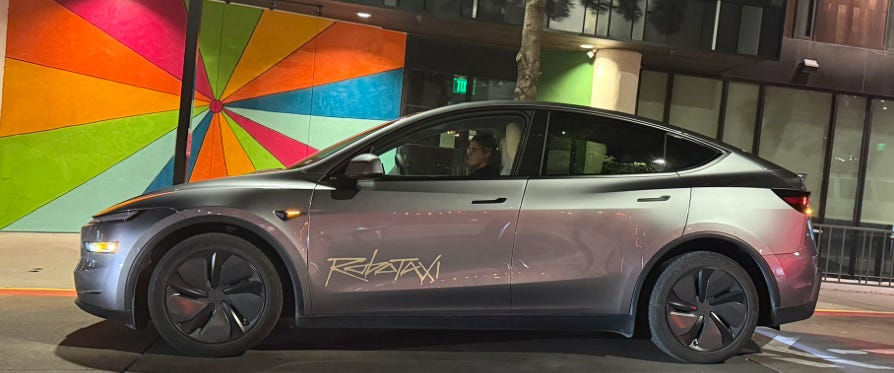
Data released this week from the National Highway Traffic Safety Administration (NHTSA) shows that Tesla’s so-called Robotaxis in Texas recorded 22 collisions in just under 12 months, half of which occurred in the past 6 months.
There was no media coverage of Tesla’s latest crash data, which showed an 4 more crashes in the last 30 days. The key characteristics of all the crashes reported since June 22nd last year are as follows:
1) Two Minor injuries (1 hospitalized).
2) 18 property damages.
3) 12 at-fault crashes (55% of total).
4) Three tow-aways.
Figure 1 below shows the miles per incident for Tesla and human drivers, who are actually 3.5x safer than Tesla Robotaxis with safety monitors in front. When it comes to miles driven until injury crashes (Tesla Robotaxis have had 2), a driverless Waymo is 1.8x safer than Tesla Robotaxis.
The consumer version of FSD among Tesla owners is racking up airbag-deployed crashes in 98% of the 808 crashes Tesla has reported this year through mid June, which I wrote about in detail in my report earlier this week, Tesla’s Crash Reports Hide FSD Injuries (here).
Figure 1: Human Drivers Are 3.5x Safer Than Tesla Robotaxis
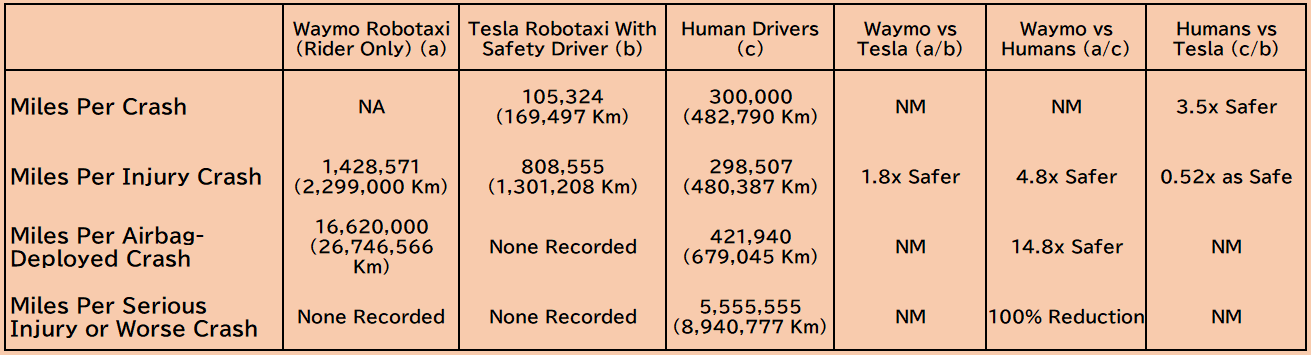
Source: NHTSA & MH research.
Good article by the Austin American-Statesman about how unsafe robotaxis and Waymos have been on Austin streets, and how fed up Austin residents are (link here).
Here are the noteworthy points about this week’s Tesla Robotaxi report, all of which include safety drivers in the front passenger seat, as well as 3 incidents with “teleoperators” helping out (refer to Figure 2 below):
Teleoperation intervention has a 100% collision rate in this sample
Every incident where a remote operator took control—13781-15395, 14043, & 11459—ended in contact with an object. Small sample, but notable given robotaxi safety claims rest partly on remote-assist as a safety net rather than a source of incidents.
Backing-Up Crashes May Be Tesla FSD’s Fault
Incident 13781-15400 (truck backed into stopped ADS), 13781-15342 (SUV backed into stopped ADS), and 13781-11784 (car backed into ADS) — are 3 separate incidents where another vehicle backed into a stationary Tesla robotaxi.
Robotaxi Rear-Ended While Stopped 5 of 22 (23%). 13781-15017, 14631, 14630, 11507, 11375—all classic “ADS stationary/creeping, human driver behind fails to stop” pattern. This mirrors the “not at fault” framing that shows up in Tesla’s Level 2 ADAS data, too.